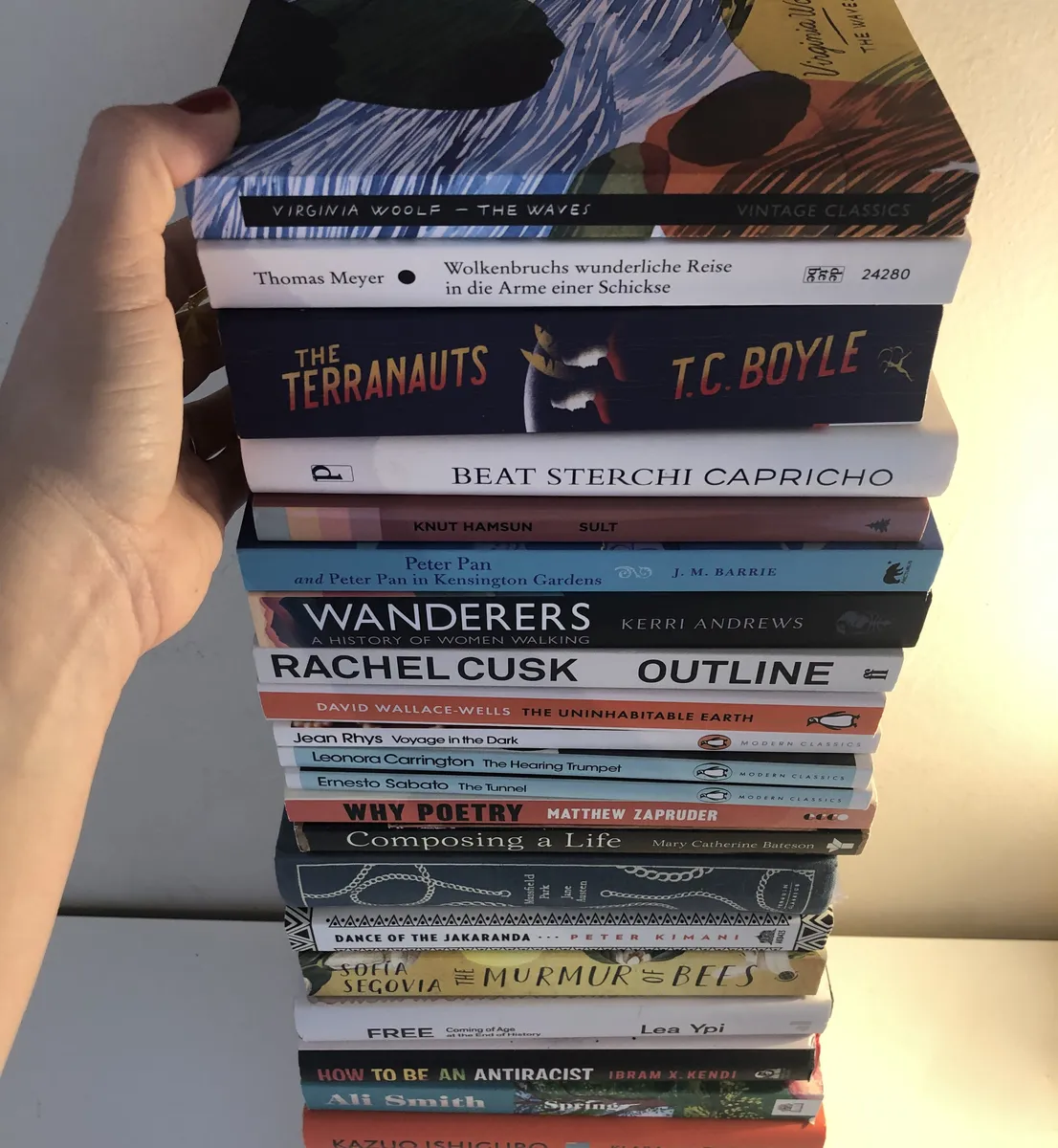
How to collect quotes, and actually keep them

Anabel, an obsessive underliner
November 13, 2026 · 3 min read
Contents · 8 sections
Read the best books first, or you may not have a chance to read them at all.
Henry David Thoreau, A Week on the Concord and Merrimack Rivers (1849)
To collect quotes and actually keep them, you need three habits: mark the lines while you read, gather them up while the book is still fresh, and keep every one in the same place, with its source. That's the whole method. The rest is how I do it.
Collecting quotes is the oldest reading habit there is. The keepers of commonplace books were doing it five hundred years ago. What has changed is where the lines come from, and how many places they can get lost in.
#Mark them while you read
In my own books, I read with a pencil. I underline, bracket, put a small star in the margin. (At university it was neon highlighters, and those books have never recovered.)
Pencil is quiet, it doesn't bleed through thin pages, and if you change your mind, it rubs out.
#Books you can't write in
Library books and borrowed books were my problem for years. I couldn't mark them, so whatever I found in them went back to the library with the book.
The fix is small: a pack of thin, removable sticky flags. One flag per passage, stuck at the line. Before the book goes back, you go through the flags and keep the passages.
#Kindle and other e-books
I barely read on my Kindle, even though I have one. I like books as objects: their weight, the way they smell, their covers, which these days are small works of art.
When I do read on it, the highlights are the easy part. The trick is to get them out of the Kindle, because nobody rereads highlights inside an e-reader. Export them (or copy the My Clippings.txt file from the device) and move them to wherever you keep everything else.
#Harvest them fresh
This is the habit that matters most, and the one I learned slowly.
Don't let too much time pass after you finish a book. Once the next one begins, the mood shifts, and the lines you marked go quiet. They're still there, but you no longer remember why they mattered.
So the evening I finish a book, I sit down for five or ten minutes and go back through it: in bed, or in my big reading chair, whose name is Charlie. Page by page, flag by flag, I collect what I marked. It's one of my favourite parts of reading. It's like walking back through a house you've just lived in.
If you're in a hurry, collect them roughly and sort them later. Rough is fine. Lost is not.
#Stop typing
I've spent hours, probably days of my life, typing passages out of books. Dictation helped a little. What really helped was stopping.
Photograph the page instead. A photo keeps the exact words, the line breaks of a poem, and the page itself, and these days a phone can turn the text in it into text you can copy. Filament does this for you: snap the page, mark the lines, keep them.
#Screens: the line and the link
For lines from films, podcasts and Instagram, my rule is: save the line and the link together, straight away. A post you meant to come back to is gone within a day. Some of my favourite lines came from a screen.
#Always keep the source
Author, title, page. For a film, the scene; for a post, the link. It feels like bureaucracy in the moment. Years later, it's the only thing that lets you use the line, quote it, or find the rest of the book.
I have a line tattooed on me, from a writing podcast, that I've never been able to trace back to its episode. A tattoo is a very good way to never lose a line, and a very poor way to keep its source.
#Keep them in one place
My lines used to live in notebooks, Apple Notes, Google Docs, Evernote, Obsidian, Scrivener and Notion. Six places meant that, in practice, they lived nowhere.
Pick one place and put everything there, including the old scraps: Kindle exports, notes, documents, screenshots. In Filament you can pour all of it in at once and it sorts out the lines for you. A notebook works too. What doesn't work is two.
Once they're in one place, the next question is how to keep coming back to them. That's how to keep a commonplace book you actually return to.
reading · commonplace book · quotes · collecting quotes
Sources
Questions
What is the best way to collect quotes from books?
Mark them while you read, then collect them while the book is still fresh: photograph or copy each passage with its author, title and page, and keep them all in one place, sorted by theme.
How do I save quotes from library books?
Mark passages with removable sticky flags instead of a pencil, then photograph or copy the pages before you return the book, with the title and page numbers.
How do I collect quotes from Kindle?
Highlight on the Kindle, then export your highlights (or copy the My Clippings.txt file from the device) and move them into the place where you keep the rest of your quotes.
Care to read more?
- guide
What book is this quote from? Five ways to trace a line
Five ways to find out what book a quote is from: exact-phrase search, Google Books, quote checkers, asking other readers, and checking your own notes.
3 min read
- guide
How to find a quote in a book
How to find a quote you remember in a book: search the e-book or Google Books, look inside the book online, use the index, or search your own notes by meaning.
2 min read
- guide
How to keep a commonplace book you actually return to
How to keep a commonplace book you actually come back to: headings that are yours, a line of your own, favourites, and small rituals of return.
3 min read