What to put in a commonplace book

Anabel, an obsessive underliner
November 13, 2026 · 3 min read
Contents · 12 sections
- 1. The sentences that are simply beautiful
- 2. The sentences that say what you half knew
- 3. Whole poems
- 4. Lines from films, podcasts and Instagram
- 5. Things overheard
- 6. Single words
- 7. Questions and things to look up
- 8. Lines for an occasion
- 9. Lines from books you can't keep
- 10. Your own replies
- What to leave out
- Where to keep it all
Instructions for living a life: Pay attention. Be astonished. Tell about it.
Mary Oliver, "Sometimes", Red Bird (2008)
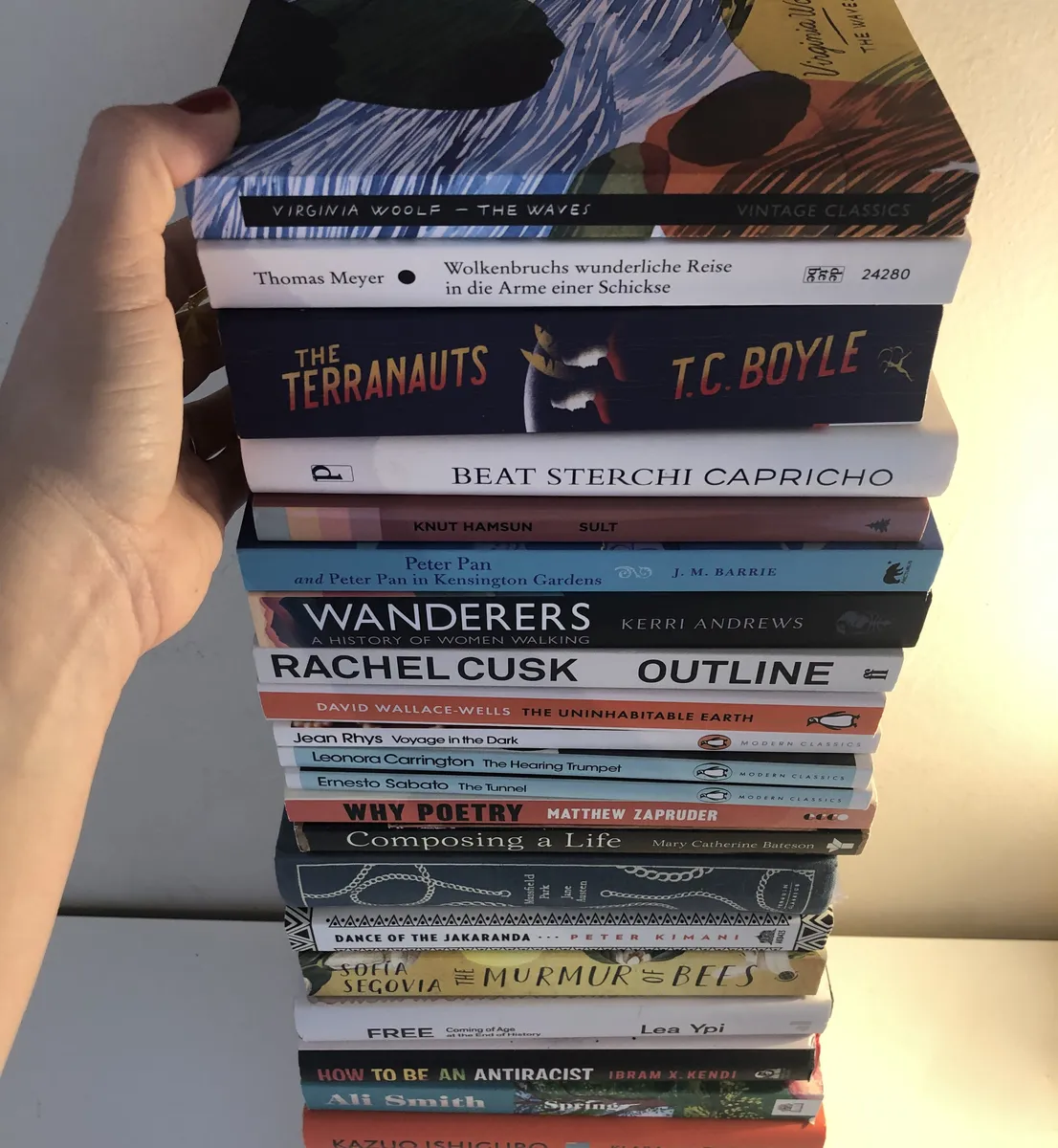
A commonplace book can hold anything that stops you: a sentence, a poem, a word, a line from a film or from someone talking on Instagram. The only rule is that it stopped you. The rest is ideas, and here are mine.
If you're new to the whole idea, here's what a commonplace book is.
#1. The sentences that are simply beautiful
I underline two kinds of sentences. The first kind is so beautiful that I have to stop reading for a moment. It doesn't need to mean anything useful. It just needs to be put together in a way I could never have put it.
These go in first. They are the reason most of us start.
#2. The sentences that say what you half knew
The second kind is an insight: something I've always half known, said in a way I've never seen it said. Those are the lines that rearrange something.
#3. Whole poems
Some things can't be cut down to one line. I keep whole poems, and every December I go through them to choose one for each friend and family member I send a card to, picked for what their year was like, or for what I learned from them.
A commonplace book full of poems turns out to be a box of presents you've been wrapping for years.
#4. Lines from films, podcasts and Instagram
Commonplace books have always held more than books. Today that means screens.
One of my favourite lines came from an Instagram video. A man called Uncle Pappy, talking about the people we happen to share the planet with. It was so poetic that it sounded like he was reading a poem, so I wrote it down word for word, and later used it in my novel, Crash Course in Loneliness.
I'm in the grocery store I see a fella
I think 'goddamn
I'm on Earth at the same time as that guy'— Uncle Pappy, Instagram
My rule for screens: save the line and the link together, the moment you see it. A post you scroll past is gone faster than any book.
#5. Things overheard
A sentence on a tram. Something a child said in a shop. Someone at a used bookshop who called people who write in the backs of books "monsters" (I am one; more on that here).
Overheard lines have no author you can name. Keep them anyway, with where and when you heard them.
#6. Single words
I keep words I find beautiful, often written in the back of the book I found them in. A word can hold a whole mood. It's also the cheapest way to make your own writing richer.
#7. Questions and things to look up
A name you didn't recognise. A place you want to see. A topic you want to read more about. Write it down next to the line that raised it. It's how one book leads to the next.
#8. Lines for an occasion
Weddings, birthdays, eulogies, a toast, the first page of a book you're giving someone. It's always easier to choose words when you already have a collection of them. Give these a heading of their own.
#9. Lines from books you can't keep
Library books, borrowed books, books you'll give away. For years I didn't know what to do with what I found in them, so it was lost when the book went back.
You can't keep the book, but you can keep the passage. Copy it out, or photograph the page, before you return it. More on that in how to collect quotes.
#10. Your own replies
Not a summary. A reply. Why did this stop you? What does it remind you of? Does it argue with something else you've kept?
Over the years, these become the most personal part of the whole book.
#What to leave out
Anything you think you should keep. A commonplace book isn't a list of famous quotes, and it isn't homework. If a line didn't stop you, it doesn't belong to you yet.
#Where to keep it all
In one place. That's the only part I'm strict about. A notebook, a document or an app, as long as it is one. I keep mine in Filament, which I built because none of the others were made with books in mind; if you're curious, here's what a digital commonplace book looks like.
reading · commonplace book · quotes · commonplace book ideas
Sources
Questions
What should I put in my commonplace book?
Anything that stops you: beautiful sentences, insights, whole poems, lines from films, podcasts or social media, overheard sentences, single words you love, questions to look up, and your own thoughts in reply. Always note where each line came from.
Can a commonplace book include things other than book quotes?
Yes. Commonplace books have always held more than books: proverbs, letters, recipes, ideas for stories. Today that includes films, podcasts, Instagram posts and screenshots.
Should I write my own thoughts in a commonplace book?
It helps. A sentence of your own about why a line mattered makes it far easier to understand and use later, and over the years those notes become the most personal part of the book.
Care to read more?
- guide
What book is this quote from? Five ways to trace a line
Five ways to find out what book a quote is from: exact-phrase search, Google Books, quote checkers, asking other readers, and checking your own notes.
3 min read
- guide
How to find a quote in a book
How to find a quote you remember in a book: search the e-book or Google Books, look inside the book online, use the index, or search your own notes by meaning.
2 min read
- guide
How to keep a commonplace book you actually return to
How to keep a commonplace book you actually come back to: headings that are yours, a line of your own, favourites, and small rituals of return.
3 min read