How to keep a commonplace book you actually return to
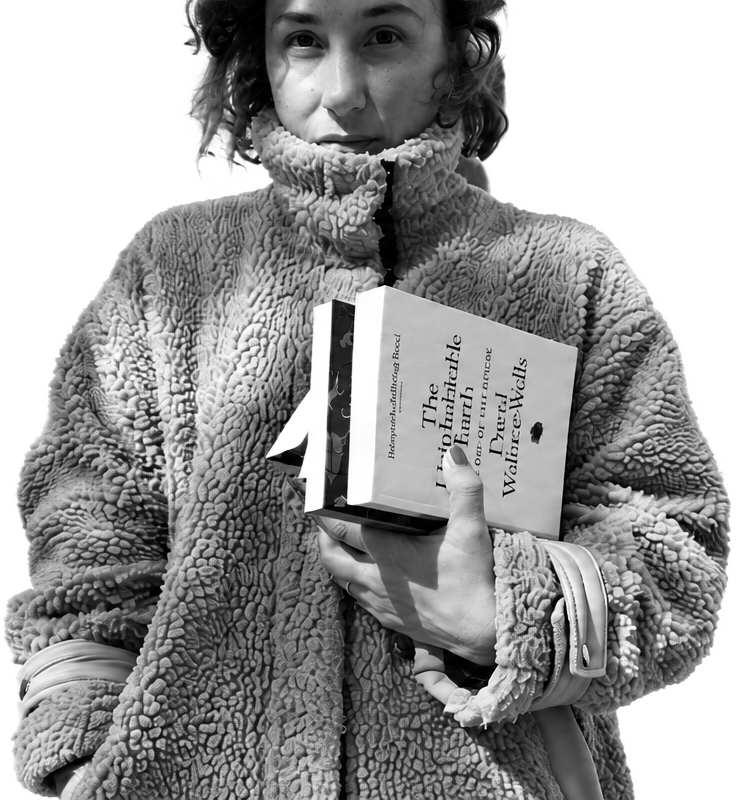
Anabel, an obsessive underliner
November 13, 2026 · 3 min read
Contents · 7 sections
Remember what it was to be me: that is always the point.
Joan Didion, "On Keeping a Notebook" (1966)
A commonplace book you actually return to has headings that are yours, a line of your own beside each passage, a few favourites, and small rituals that bring you back. Copying lines out is the easy part. Going back is the habit that makes it worth it.
If you haven't started yet, begin with what a commonplace book is and how to collect quotes. This is about what comes after.
#The monster in the back of the book
I write notes in the backs of books. Words I find beautiful, thoughts, topics to look up later. Once, in a used bookshop, I overheard someone say that people who write in the backs of books are monsters.
So I'm a monster.
And I'll admit: I don't always go back to those notes when I finish the book. But sometimes, years later, I take a book off the shelf, find the pages at the back, and I'm astonished. At the ideas I had then, the connections I made. Sometimes I can't even follow my own thoughts anymore.
That's the best and the worst of an unkept notebook. It holds who you were, and you only find it by accident.
#Make the headings yours
A commonplace book is sorted by theme, and the themes should be yours, not a librarian's. Not Literature and Philosophy, but the things you keep circling.
Mine, at the moment, are existence, death and dying, the earth, writing and oneness. I didn't choose them on day one. They appeared. Start with a few, and let the rest show up.
#Write one line of your own
Next to the passage, write why it stopped you. One sentence. It doesn't need to be clever; it needs to be true on the day you wrote it.
This is the part I'm worst at, and the part I'm always most grateful for later. Lines without a note are beautiful. Lines with a note are yours.
#Keep favourites
Some lines you'll return to again and again. Mark them, so you can find them without searching. In Filament that's what the heart is for.
The one I go back to most is Kurt Vonnegut's. To me it's the best summary there is of being a human being on this planet:
Kilgore Trout once wrote a short story which was a dialogue between two pieces of yeast. They were discussing the possible purposes of life as they ate sugar and suffocated in their own excrement. Because of their limited intelligence, they never came close to guessing that they were making champagne.
— Kurt Vonnegut, Breakfast of Champions (1973)
(While writing this, I checked the source in my own library and found I'd filed it under the wrong Vonnegut. It's from Breakfast of Champions. Even favourites need their sources checked.)
#Give yourself reasons to go back
Return doesn't happen by willpower. It happens when going back is part of something you already do:
Before writing. Look up a heading before you start. Your own lines are the best warm-up there is.
On a quiet evening. Ten minutes, a handful of lines, no plan.
For other people. Every December I choose a poem from mine for each friend and family member I send a card to. It sends me through the whole collection once a year.
When a line half surfaces. Something comes back to you, a few words, a feeling. Go and find it. It's the most satisfying search there is. (Once, I spent an hour searching a physical book for a line that turned out to be in a different book entirely.)
#Let it surprise you
The lines you've forgotten are often the best ones. Let a few come back on their own: open the notebook at random, or let your app show you one a day. Filament shows me one each day, with something to think about.
#Don't tidy it to death
A commonplace book is allowed to be messy. Headings will overlap, some lines will sit in the wrong place, a few will lose their magic. That's fine. A commonplace book you're afraid to touch is one you won't open.
Keep adding, keep going back, and every few years, read the whole thing. You'll find out what you were circling. You might even find out who you were.
reading · commonplace book · how to keep a commonplace book · habits
Sources
Questions
How do I start a commonplace book?
Choose one place to keep it, then copy in the last line you underlined, with its author, title and page, under a heading. Add new lines after each book, while they are still fresh.
How do you organise a commonplace book?
Under headings or themes of your own: the subjects you keep returning to, such as grief, home or writing. Mark favourites, note every source, and add a line of your own about why each passage mattered.
How often should I read my commonplace book?
Little and often works best: a few lines on a quiet evening, a heading you look up when you write, a favourite you return to. The point is to make going back a habit, not a chore.
Care to read more?
- guide
How to collect quotes, and actually keep them
How to collect quotes from books you own, borrow or read on a Kindle, and keep them in one place where you can find them again.
3 min read
- guide
What to put in a commonplace book
Ideas for what to put in a commonplace book: beautiful sentences, insights, whole poems, lines from films and Instagram, words you love, and your own replies.
3 min read
- guide
Commonplace book examples, from Locke to now
Famous commonplace books, from Erasmus and John Locke to Jefferson, Woolf, Auden and Lovecraft, and one modern example: what they kept, and how.
4 min read